01
Document Management
I improved the upload flows to reduce duplicate uploads across sections. The updated flow gives advisers a clearer view of which documents are already on file.

Improving the usability of complex financial forms within an established workflow.
A core workflow used daily
The FactFind is a long, complex workflow for collecting detailed information about a client's financial situation. Over time, different sections had developed inconsistent patterns, input styles and validation rules. This made it harder for advisers to move between tabs, especially when they used the workflow dozens of times a week.
THE DECISION
I redesigned key parts of the existing workflow to reduce friction while preserving its underlying business and regulatory logic.
THE OUTCOME
The improvements are live and continue to evolve with the product. Shared patterns give later updates a more consistent structure.
Four areas where targeted improvements balanced adviser efficiency with existing business and regulatory constraints.
I improved the upload flows to reduce duplicate uploads across sections. The updated flow gives advisers a clearer view of which documents are already on file.
I improved the verification flow with a more structured, step-by-step experience and clearer status indicators for AML/KYC checks.
I applied progressive disclosure to dense financial forms, showing only the fields relevant to each client type.
I introduced consistent section-level progress tracking and collapsible groups to help advisers keep context during interruptions, such as client calls.
A selection of related work across 360 Advisor, including forms, workflows and client-facing product areas.
All screens use test data.
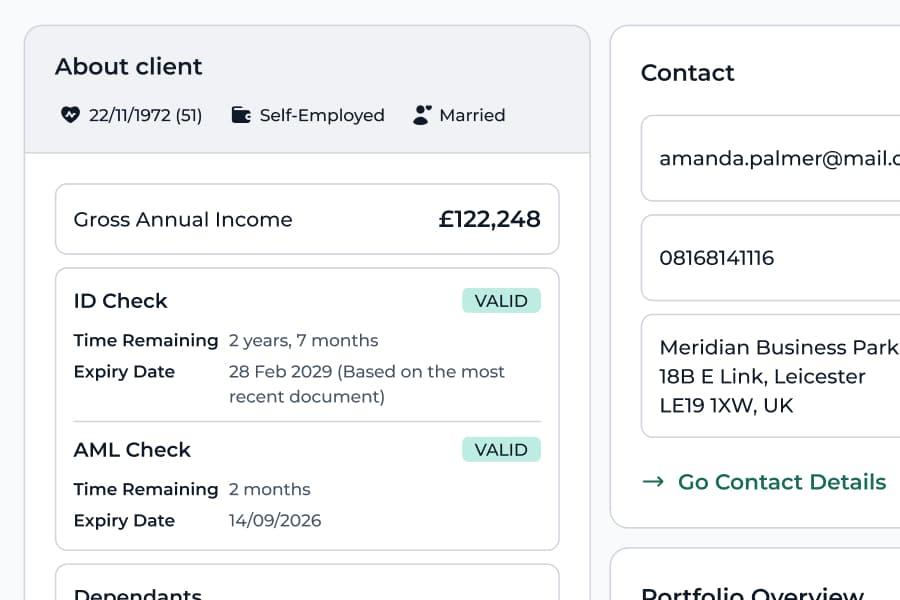
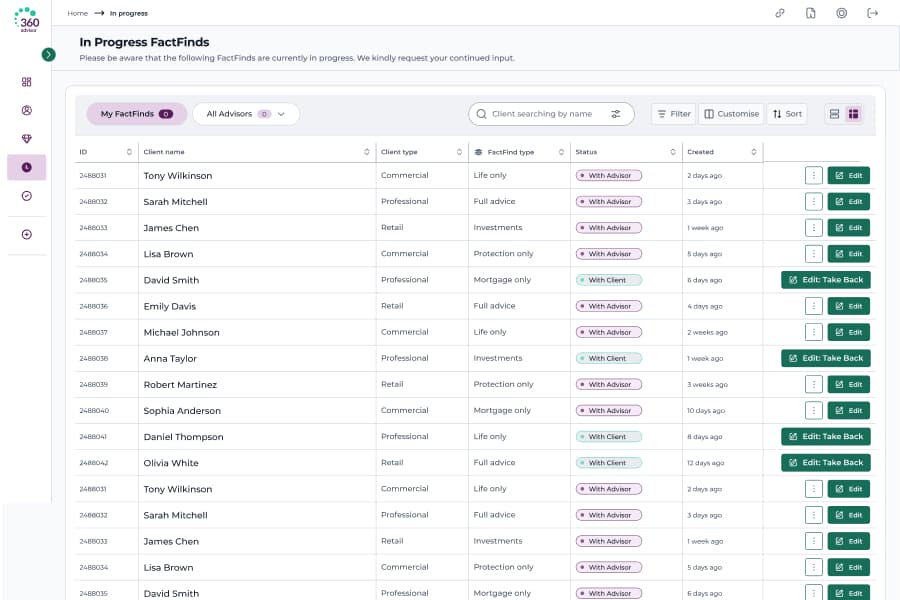
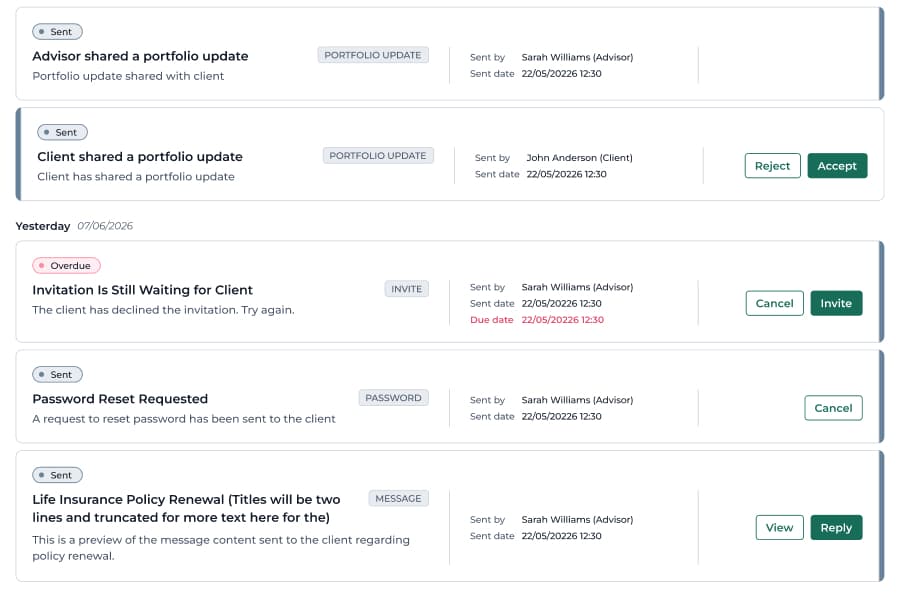
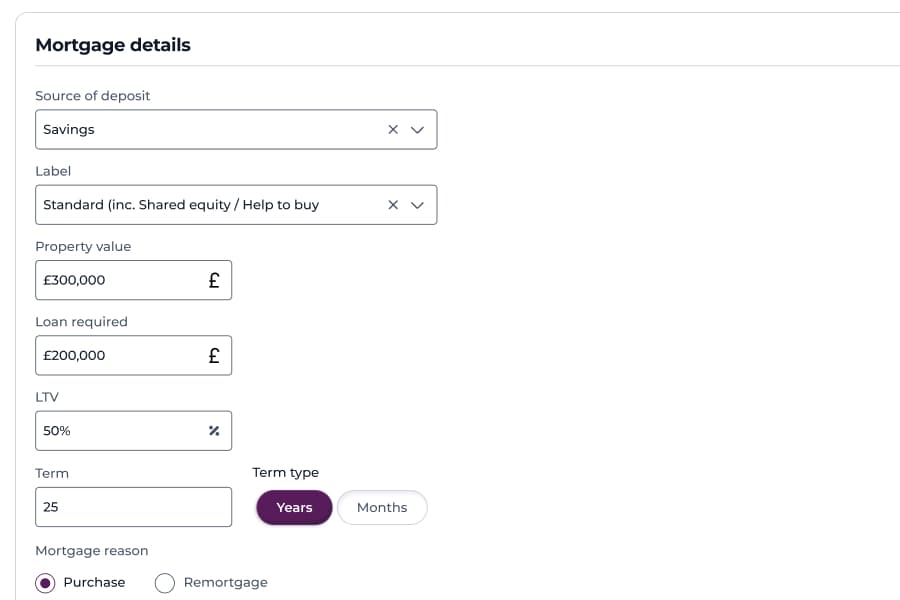
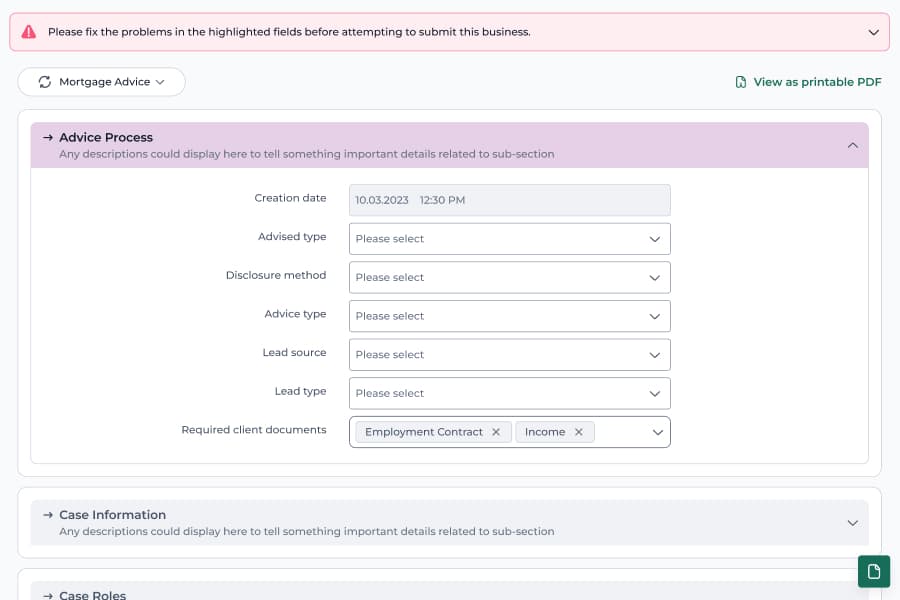
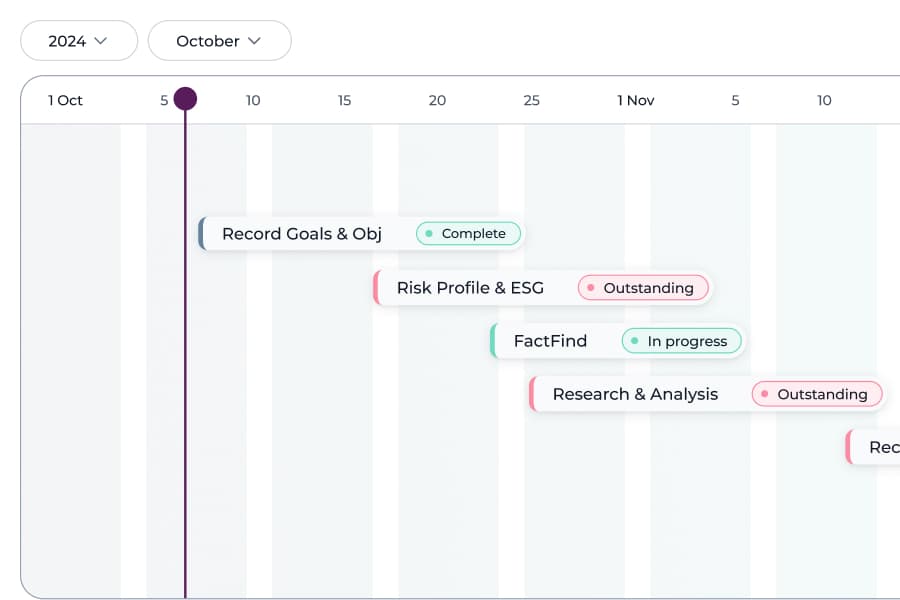
Key sections now follow a more consistent pattern.
5 sections improved: Documents, Applicants, Assets, Income, Expenditure
Complex forms show the information relevant to each client.
CONDITIONAL FIELDS ACROSS CLIENT CIRCUMSTANCES
Later updates can follow the same structure.
patterns inherited by default